Bluesky Bottle
Bluesky Bottle
Bluesky Bottle
Explore our top-performing custom-engineered plastic bottles, manufactured under clean-room conditions matching global pharmaceutical standards.
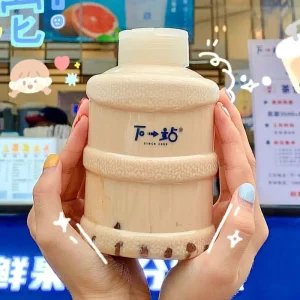
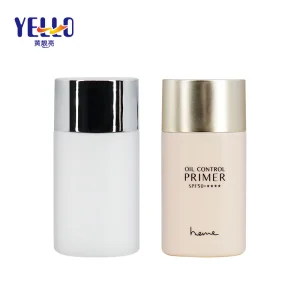
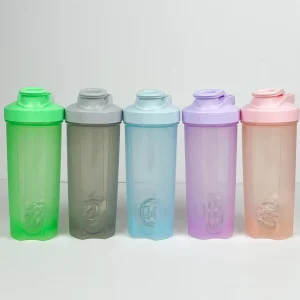

The global dairy packaging landscape is shifting dynamically. Driven by the rapid growth of premium pasteurized milk, functional yogurt beverages, and RTD (Ready-To-Drink) milk formulas, the demand for high-barrier plastic milk bottles has surged exponentially. The transition from carton packaging to rigid plastic containers is backed by consumer preferences for resealability, visual clarity, and enhanced drop-resistance.
Modern material science is at the heart of this shift. While standard HDPE (High-Density Polyethylene) remains the gold standard for fresh milk jugs due to its light barrier protection and chemical inertness, PET (Polyethylene Terephthalate) has witnessed phenomenal market share growth in high-temperature pasteurized (UHT) and premium milk sections. Advanced formulations now utilize multi-layer blow molding technologies that incorporate EVOH (Ethylene Vinyl Alcohol) gas barriers or light-blocking additives to prevent UV-induced oxidation of vitamins and riboflavin in fresh milk, thereby extending the shelf life without artificial preservatives.
To assist procurement managers in choosing the ideal packaging substrate, our engineering division has tabulated key plastic resins utilized in modern dairy manufacturing:
| Material Resin | Common Dairy Application | Gas & Light Barrier Properties | Recyclability & Circular Economy Profile | Temperature Resistance |
|---|---|---|---|---|
| HDPE (High-Density Polyethylene) | Fresh gallon jugs, pasteurized milk bottles | Excellent moisture barrier, moderate oxygen barrier. Naturally opaque options protect milk from UV damage. | High (Code 2). Widely accepted worldwide in circular loops. Can use up to 50% rHDPE. | -50°C to 110°C. Ideal for cold chain logistics and low-temp pasteurization. |
| PET (Polyethylene Terephthalate) | Premium RTD juices, cold-brew coffee milks, UHT milk | Excellent clarity. Requires specialized UV-blocking additives for raw milk safety. | Very High (Code 1). Highest market demand for PCR (Post-Consumer Recycled) loops. | -40°C to 70°C. High clarity but limited structural thermal resistance unless heat-set. |
| PP (Polypropylene) | Yogurt containers, hot-fill dairy beverages | Superior moisture barrier, high thermal resistance. Slightly lower oxygen barrier than PET. | Moderate (Code 5). Growing infrastructure for PCR PP integration. | -10°C to 120°C. Excellent for hot-fill sterilization processes. |
For procurement directors at multinational dairy groups, plastic milk bottle sourcing is no longer just about cost-per-unit. It is an exercise in complex regulatory compliance, supply chain risk mitigation, and carbon footprint reduction. B2B buyers operate within a landscape governed by strict international food contact regulations, demanding absolute transparency in factory chemical formulations.
To successfully pass B2B supply audits, a manufacturing partner must operate under strict global quality structures. The table below lists the minimum certification benchmarks required by Tier-1 buyers:
An authoritative review of the global leaders in rigid dairy packaging solutions, judged by production output, technical innovation, and quality control systems.
HQ & Facilities: Guangzhou, China (3 advanced manufacturing plants, covering 20,000+ sqm)
Production Capacity: 40+ high-precision injection and stretch blow molding machines yielding an annual capacity of over 11 million units.
Core Focus: Bluesky stands out as a leading technical developer of Tritan water bottles, food storage containers, and custom-molded high-barrier PET/HDPE milk and dairy packaging. Backed by a professional R&D division releasing over 100 custom configurations annually, they provide B2B clients with rapid CAD/3D mockups and free rapid-prototyping, making them a preferred supply partner for high-growth global beverage brands.
HQ & Facilities: Hard, Austria (Over 170 plants globally)
Production Capacity: Multi-billion packaging systems annually.
Core Focus: ALPLA is the world's leading manufacturer of high-quality rigid packaging solutions. Known for their "wall-to-wall" production plants where bottles are blown directly inside the customer's dairy filling lines, they lead in circular economy efforts, operating their own PET and HDPE recycling facilities.
HQ & Facilities: Evansville, Indiana, USA
Production Capacity: 250+ manufacturing locations worldwide.
Core Focus: Specializes in lightweight HDPE milk jugs and high-speed custom container molding. Berry Global utilizes advanced high-barrier designs that decrease overall shipping weight while maintaining high drop-test ratings.
HQ & Facilities: Zurich, Switzerland / Melbourne, Australia
Production Capacity: Leading supplier of rigid and flexible barrier packaging.
Core Focus: Highly respected for their engineering of PET bottles that resist hot-filling processes, Amcor is at the forefront of adding PCR resins into premium brand packaging lines.
HQ & Facilities: Chesterfield, Missouri, USA
Production Capacity: Direct supplier to major US grocery store dairy networks.
Core Focus: Silgan is renowned for manufacturing classic blow-molded gallon and half-gallon jugs, utilizing robust, food-safe HDPE structures featuring comfortable molded handles.
HQ & Facilities: Kremsmünster, Austria
Production Capacity: Large-scale operations spanning Europe and Asia.
Core Focus: Innovative packaging concepts, specifically their signature K3® cardboard-plastic combinations, which dramatically reduce plastic weight in yogurts and dairy beverage packaging.
HQ & Facilities: Lancaster, Pennsylvania, USA
Production Capacity: Advanced multi-layer extrusion capacity.
Core Focus: A market leader in custom-designed plastic milk bottles with specialized active oxygen scavengers that shield shelf-stable dairy and protein liquids.
HQ & Facilities: Plymouth, Michigan, USA
Production Capacity: Extensive multi-layer preform injection capabilities.
Core Focus: High-volume PET container manufacturer utilizing Direct-Object Printing technology, which eliminates paper or plastic labels by printing graphics directly onto the bottle body.
HQ & Facilities: Cascais, Portugal
Production Capacity: Operates inside client plants across 18 countries.
Core Focus: Logoplaste’s wall-to-wall production model streamlines B2B supply chains by removing the need for secondary transportation and storage, thereby lowering Scope 3 carbon emissions.
HQ & Facilities: Voorhees, New Jersey, USA
Production Capacity: ISO 13485 & FDA audited facilities.
Core Focus: Comar specializes in high-precision dose-delivery caps, fitments, and custom-molded food/dairy bottles, ensuring consistent wall thickness for automated filling setups.
As supply chains shift globally, Chinese manufacturing centers like Guangzhou have evolved into digital Factory 4.0 operations. Modern plastic processing has moved beyond manual setups. The integration of high-speed automation, real-time QA monitoring, and localized supply loops allows Chinese factories to supply top-tier packaging at competitive price-points.
By using central automated material drying and conveying systems, factories prevent contamination from ambient dust. High-speed injection blow molding machines (IBM) and injection stretch blow molding machines (ISBM) are monitored using advanced PLC networks. Automated inline sensors detect weight variations down to 0.05 grams and utilize visual recognition cameras to reject containers with minor defects. This ensures that every bottle arriving at a customer's filling plant has consistent neck tolerances and fits perfectly in modern capping lines.
Additionally, China’s industrial ecosystem provides unmatched supply chain resilience. From mold manufacturing to raw material petrochemical sources and custom logistics networks, every component is located near the factory. This geographic concentration drastically shortens lead times, allowing B2B buyers to quickly respond to sudden shifts in retail demand.
Established in 2015, Guangzhou Bluesky Plastic Products Co., Ltd. has grown into a leading manufacturer of premium insulated water bottles, Tritan water containers, and customized food-grade packaging solutions.


We offer negotiable MOQs for wholesale orders of customized bottles (no direct retail or drop-shipping). Send an inquiry to secure our competitive pricing.

Share your concepts, and our design team will generate 2D/3D CAD models. We can sign confidentiality agreements (NDAs) to protect your proprietary designs.

Our state-of-the-art automated, dust-free production lines significantly shorten lead times, reduce labor costs, and maintain consistent quality.

We sample-test products every 2 hours during manufacturing, supported by 2 dedicated QA lines. Detailed inspection reports are provided with every shipment.
In B2B applications, plastic bottles serve diverse functional requirements depending on the destination market and local consumer habits:
Get expert answers to critical technical questions regarding materials, food safety compliance, and custom molding.
HDPE is naturally opaque and provides superior light barrier properties, protecting raw milk from light-induced nutrient oxidation. PET is highly transparent and lightweight, making it ideal for visual merchandising of juices and RTD milk beverages. However, PET requires UV-blocking additives to protect fresh milk.
Yes, but they must undergo specialized decontamination processes certified by the FDA or EFSA. Alternatively, factories utilize a multi-layer co-extrusion setup where the recycled PCR layer is sandwiched between two layers of virgin food-contact plastic, ensuring zero risk of chemical migration.
Automated production lines use inline pressure-decay testing or vacuum testing systems. Each container is pressurized briefly, and sensors detect even tiny pressure drops, allowing the line to automatically reject defective bottles before packaging.
Typically, CAD and 3D mockups are finalized in 3-5 days. Creating the prototype mold takes about 15-20 days, and producing the final multi-cavity production mold requires 30-45 days, depending on container complexity.
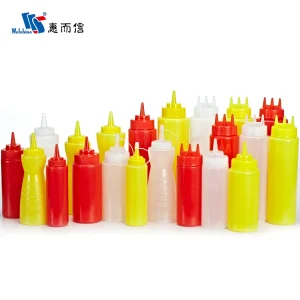
From food-grade squeeze containers to high-performance sprayers, our catalog offers reliable, industrial-grade packaging.