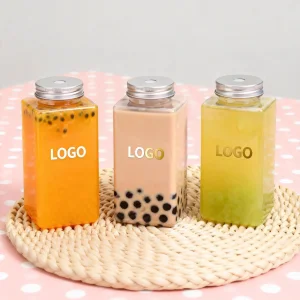
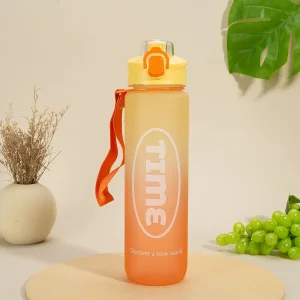
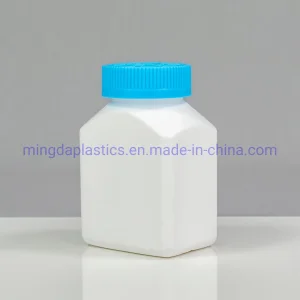
Bluesky Bottle
Bluesky Bottle
Bluesky Bottle
Engineered for dynamic durability, food contact compliance, and brand aesthetic integration.
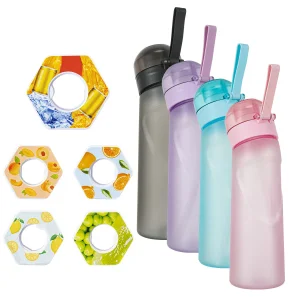
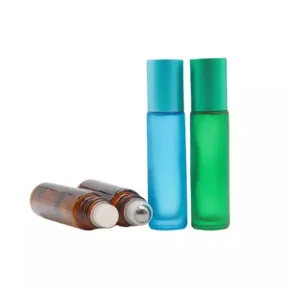
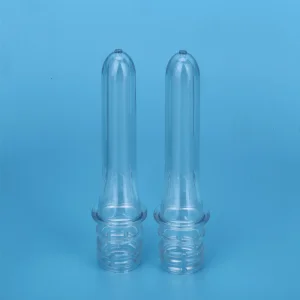
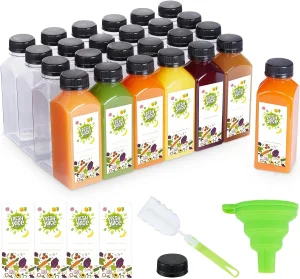
Established in 2015, Guangzhou Bluesky Plastic Products Co., Ltd. has established itself as an elite player in the global packaging value chain. Operating 3 modern manufacturing sites encompassing an expansive physical footprint of over 20,000 square meters, our facilities are built to meet the needs of international brand buyers. We optimize heavy-volume production workflows across our sites with approximately 400 highly trained employees and tech-advanced assembly lines.
Our technological core is backed by more than 40 advanced injection and blow molding machines, capable of generating an annual throughput exceeding 11 million units. As a leading manufacturer of insulated water bottles, BPA-free Tritan water bottles, precision-molded food containers, and flexible medical-grade silicone components, we bridge the gap between design innovation, functional longevity, and compliance certifications.
"Health is from SH Tech, we are always with you!" – This guiding corporate principle drives our focus toward non-toxic, environmentally stable material synthesis and ergonomic structures designed for global distribution.

Analyzing the macro-economic forces, polymer distribution channels, and technical requirements governing modern plastic containers.
The worldwide rigid plastic packaging market has experienced significant structural change over the past decade. Growing demands from the pharmaceutical, cosmetics, food and beverage, and specialty chemical sectors have pushed manufacturers to move beyond low-cost production. Today's commercial markets require a balance of high barrier performance, low chemical migration, and strict compliance with food contact standards.
Historically, the procurement of plastic containers focused on raw unit economics. However, modern purchasing strategies prioritize material transparency, physical durability, and supplier supply-chain stability. International regulatory updates, such as the European Food Safety Authority (EFSA) plastic regulation modifications and U.S. FDA Title 21 CFR standards, mean that purchasing raw materials without verified traceability documents introduces operational risks.
Our production infrastructure, rigorous quality assurance, and design services are customized for international B2B clients.

We offer negotiable MOQ options tailored for established brands and scaling enterprises. Please note we do not support retail orders or direct individual shipping. For custom wholesale inquiries, our team ensures competitive tier-based pricing structures alongside professional logistics coordination.

Send us your initial ideas, and our design team will generate detailed 2D/3D CAD models for your evaluation, with free prototype samples provided. We execute comprehensive non-disclosure agreements (NDAs) to secure your IP. Our active R&D team designs over a hundred proprietary designs annually to keep pace with changing market trends.

Our advanced water bottle factory features automated, dust-free production lines. This high level of automation reduces human error, shortens lead times, improves product consistency, and lowers operational overhead. This efficiency allows us to offer competitive pricing to our partners.

We verify and document all production steps to match your specifications. After testing raw material purity, our quality control team samples products off the lines every 2 hours, supported by two independent quality inspection stages. Full chemical stability and mechanical stress testing reports are available for your records.
Our long-term R&D focus is built around smart features, environmental sustainability, and material performance.
We are working to incorporate high ratios of FDA-approved post-consumer recycled (PCR) PET and HDPE into our packaging designs. This helps our partners meet global sustainability regulations while maintaining container durability and appearance.
Our engineers are testing next-generation, bio-derived plastics that offer comparable barrier performance to petroleum-based polymers. These materials are designed to compost cleanly in industrial facilities, reducing long-term landfill waste.
We are developing integrated closure technologies, such as embedded NFC chips and temperature-sensitive color indicators. These additions help brands improve supply chain tracking, combat counterfeiting, and provide real-time product freshness status to consumers.
Technical answers to key product design, compliance, and custom ordering questions.
We use only 100% virgin, FDA-approved plastic resins (such as Tritan, PP, HDPE, and PET) directly from verified chemical suppliers. Our production is housed in dust-free cleanrooms to prevent particulate contamination. Additionally, our quality control team runs batch testing every 2 hours to confirm there is no heavy metal or volatile chemical migration.
Yes. Our complete OEM/ODM service starts with your product concepts or sketches. We create 2D/3D CAD models within 48 hours for your approval, followed by 3D-printed prototypes for hands-on evaluation. Once approved, we build high-precision, multi-cavity injection molds to ensure consistent dimensions across large production volumes.
PET provides high transparency and excellent gas barrier resistance, making it ideal for carbonated beverages, food spreads, and cosmetics. However, it is less resistant to strong acids and bases. HDPE is translucent but offers superior chemical resistance to corrosive compounds, oils, and acids, which makes it the standard choice for household and industrial chemicals.
We perform standard vacuum chamber leak tests, torque testing on threaded closures, and drop tests at varying temperatures. These evaluations ensure that our bottles, caps, and preforms perform reliably under air travel pressure and rough land transportation.
PET has a glass transition temperature of approximately 70°C, limiting its use to cold or warm-fill applications. Tritan handles temperatures up to 100°C without warp or chemical leeching, making it ideal for boiling water. PP offers the highest thermal resistance, stable up to 120°C, which makes it suitable for hot-fill processing and industrial steam sterilization.
Premium materials engineered for cosmetics, beverages, health supplements, and sports hydration.