Bluesky Bottle
Bluesky Bottle
Bluesky Bottle
The global consumer goods packaging sector is undergoing a profound paradigm shift. Driven by aggressive environmental legislation—such as the European Union’s Packaging and Packaging Waste Regulation (PPWR) and Extended Producer Responsibility (EPR) mandates worldwide—multinational brands are systematically redesigning their structural footprint. Linear "take-make-waste" petrochemical supply chains are rapidly transitioning toward closed-loop circular systems.
For procurement officers and ESG growth directors, locating and vetting a world-class biodegradable bottle manufacturer is no longer simply about cost efficiency. It has become a strategic requirement for risk mitigation and carbon compliance. Key buying requirements now focus on structural performance parity, composting speed certified by international authorities, and the ability to scale output without compromising tensile strength or barrier integrity.
Polylactic Acid (PLA) and Polyhydroxyalkanoates (PHA) represent the forefront of bio-polymer engineering. PLA offers high clarity and rigidity for cold-fill applications, while PHA synthesized by bacterial fermentation delivers marine-degradable properties, resolving the persistence problem of traditional plastics.
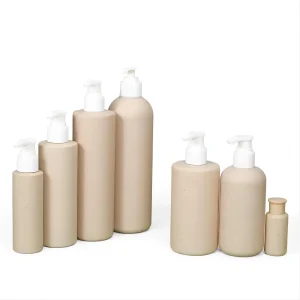
By compounding post-industrial organic agricultural byproducts—such as wheat straw, sugarcane bagasse, and bamboo fibers—with biodegradable binders, manufacturers create highly durable packaging. This pathway yields textured cosmetic containers with a visual commitment to sustainability.
Addressing moisture loss and oxygen transmission rates (OTR) is critical. The integration of nanocellulose and water-borne barrier coatings ensures bio-bottles protect active ingredients, extending the shelf-life of cosmetics, food products, and chemical formulations.
Established in 2015, Guangzhou Bluesky Plastic Products Co., Ltd. stands as a benchmark of modern eco-oriented plastic manufacturing. Operating across multiple advanced manufacturing sites, the company integrates end-to-end design, tooling, injection molding, and assembly pipelines.
Guided by the operational principle that "Quality is our culture," Bluesky runs an extensive research and development team, paired with rigorous quality control measures throughout the manufacturing process. Looking forward, the company is focused on embedding smart technologies, sustainable materials, and safety-centric product lines to support healthy living globally.


Negotiable minimum order quantities tailored for brands seeking container-load or volume wholesale purchasing. (Note: Retail/individual distribution and direct-to-consumer dropshipping are not supported).

Convert brand concepts into detailed 2D/3D technical drafts. Free rapid prototyping and structural samples, backed by NDAs (Non-Disclosure Agreements) to protect proprietary Intellectual Property.

Continuous investment in cleanroom manufacturing corridors and dust-free automated molding lines reduces labor overhead and maintains clean, consistent results for sensitive applications.

Strict structural verification of raw resins, combined with automated in-line inspection loops every 2 hours and dedicated QA audit stages. Full regulatory compliance logs are generated for every run.
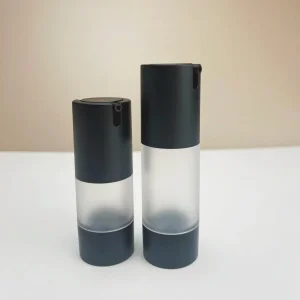
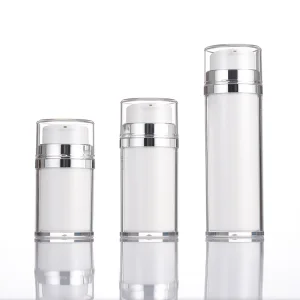
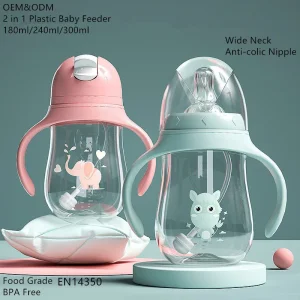
Offering a strong combination of production scale and design innovation, Guangzhou Bluesky supports brands with 3 modern manufacturing facilities. The company is equipped with automated injection systems and dust-free packaging setups. Their technical capabilities span specialized bio-composite mixtures, such as wheat straw polymer matrices, combined with highly accurate airless dispenser systems for cosmetics, healthcare, and infant products.
As a global supplier of polylactic acid (PLA) polymers derived from renewable agricultural resources, NatureWorks produces the raw material foundations for the thermoforming and blow molding sectors. Their Ingeo biopolymers provide a low-carbon alternative to traditional PET, offering clarity, rigidity, and compatibility with municipal composting infrastructure.
Novamont is a global leader in the development and manufacture of starch-derived biodegradable bioplastics. Their proprietary Mater-Bi resin grades are widely utilized in blow-molded bottles and agricultural mulching films. Mater-Bi degrades in municipal and industrial composting facilities, helping mitigate post-consumer plastic pollution in European supply chains.
Danimer Scientific is known for developing marine-degradable resins using Nodax PHA. Derived from plant oils through microbial fermentation, this polymer is engineered to degrade fully in natural water environments, offering a viable solution for single-use containers and functional packaging applications.
Sulapac manufactures bio-composite alternatives designed to replace traditional plastic jars and bottles in the premium cosmetic sector. Combining sustainably sourced wood fibers and biodegradable binders, their materials offer functional barrier properties, industrial compostability, and a distinctive organic aesthetic.
BASF produces ecovio, a high-performance, certified compostable polymer blend. By combining ecoflex (a biodegradable polyester) with PLA, the company supplies robust resin compounds for extrusion and injection blow molding, providing packaging manufacturers with high tear strength and thermal stability.
This joint venture specializes in high-heat PLA technology, marketing under the Luminy brand. Their product range includes clean PLA resins and chemically recycled PLA (rPLA) variants, allowing manufacturers to create lightweight, rigid bottles with reduced life-cycle greenhouse gas emissions.
FKuR offers a wide range of bio-based and biodegradable plastic compounds specifically engineered for injection molding and extrusion. Their drop-in solutions, like Terralene, utilize renewably sourced sugarcane to create durable, recyclable bottles that integrate into existing logistics chains.
Kaneka manufactures Green Planet (PHBH), a bio-polyester produced via micro-organism fermentation using plant oils. Certified for biodegradation in soil and marine environments, PHBH is a suitable option for packaging, straws, and thin-walled container configurations.
Lacerta Group specializes in custom thermoformed packaging solutions, working closely with consumer brands to incorporate bio-based resins and high-content recycled PET. Their design services help companies reduce plastic use while maintaining product protection and display performance.
Verify that materials hold international certifications such as ASTM D6400 (US) and EN 13432 (EU) for compostability, as well as FDA approval for food-contact applications.
Select resins that run efficiently on standard machinery (e.g., ISBM or IBM equipment) to avoid production delays and high tooling conversion costs.
Match the bottle's material properties (such as PLA, PHA, or post-consumer recycle blends) with local collection and recycling infrastructure to ensure proper disposal.
"Biodegradable" refers to a material's capacity to be broken down by microorganisms over time. "Compostable" refers to materials that degrade within a specific timeframe under controlled temperature and humidity conditions in composting facilities, leaving no toxic residues.
Standard PLA bottles deform at around 55°C (131°F). However, modified PLA, high-heat PLA copolymers, and specialized fiber composites can withstand hot-fill temperatures up to 90°C (194°F), matching the thermal performance of conventional PET.
Generally, no. PLA and other bioplastics can contaminate traditional PET recycling streams due to differing melting temperatures. Clear labeling and sorting systems are necessary to route these materials to appropriate composting or recovery facilities.
Under dry, temperature-controlled conditions, biodegradable bottles remain stable for 12 to 24 months. Degradation triggers—such as high heat, humidity, and active soil microbes—are typically encountered only at end-of-life disposal.
Yes. Manufacturers like Guangzhou Bluesky offer comprehensive OEM/ODM design services. Standard tools can be modified or custom CNC steel molds fabricated to apply embossed logos, silk-screen printing, and custom finishes to bio-resins.