Bluesky Bottle
Choosing a bottle is also choosing a daily habit, a waste pathway, and a resource demand. Buyers increasingly ask, “What are alternatives to plastic bottles?” The answer includes stainless steel, glass, aluminium, cartons, and refillable systems. Each option has practical strengths. Each also has environmental limits.
The OECD’s Global Plastics Outlook reports that the world generated 353 million tonnes of plastic waste in 2019. Only about 9% was recycled. The report also warns that plastic waste could nearly triple by 2060 without stronger action. These figures explain why many buyers are moving away from disposable plastic bottles. However, replacing one material does not automatically create a better result. Weight, manufacturing energy, transport distance, durability, and end-of-life recovery all matter.
The United Nations Environment Programme and Life Cycle Initiative emphasize that reusable packaging can reduce impacts when people use it repeatedly. That detail is easy to miss. A steel bottle used for years may outperform many single-use containers, especially when filled from a reliable tap. A heavy glass bottle transported over long distances may perform less efficiently. The buyer’s routine matters.
This article examines why alternatives can offer better value, safety, and long-term usefulness. It considers purchase price, cleaning effort, insulation, taste, durability, and waste reduction. It also questions simple marketing claims. “Reusable” is not automatically sustainable. A bottle forgotten in a cupboard solves little. Good choices require evidence, honest comparisons, and realistic daily use.
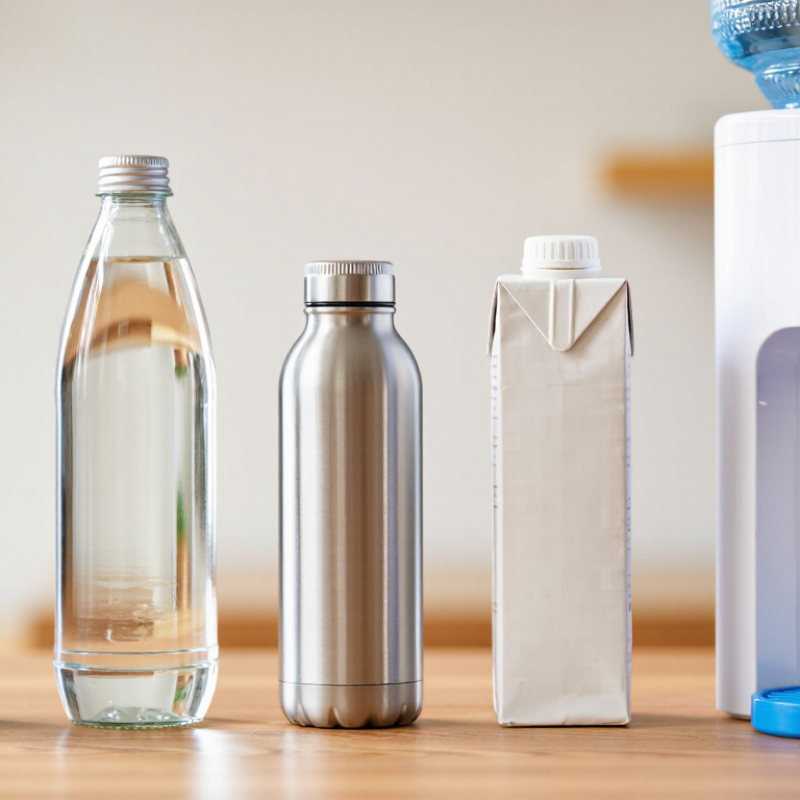
Why Are Alternatives to Plastic Bottles Better for Buyers?
The United Nations Environment Programme reports that over one million plastic bottles are bought every minute worldwide. At that pace, a single buying habit becomes a massive material stream. Picture a busy station: bins fill with clear bottles, caps, labels, and leftover water. Buyers may pay little for each bottle, but repeated purchases create higher long-term costs.
Reusable bottles can reduce this cycle when people refill them regularly. Stainless steel often offers durability, while glass can preserve taste and resist odors. A well-designed bottle also fits a work bag, car holder, or school backpack. That daily convenience matters. Yet alternatives are not automatically better. Manufacturing, shipping, and cleaning require energy and water. A heavy bottle used only a few times may perform poorly compared with a lighter one used for years.
The most reliable choice depends on actual behavior, not advertising claims. Buyers should check material details, repair options, expected lifespan, and cleaning needs. They can also compare capacity before purchase. A small bottle may require frequent refills, while an oversized one may stay unused at home. The honest answer is messier. Personal habits decide much of the result. An alternative helps most when it replaces many disposable purchases, survives regular use, and remains easy to clean after a long day.
For buyers, bottle material changes more than appearance. A 750 mL PET bottle may weigh roughly 20–40 grams, while glass often reaches 300–500 grams. That difference matters in a school bag, delivery carton, or daily commute. PET is light and resists drops, but it scratches easily and softens under high heat. Aluminum stays light, usually around 100–150 grams, yet dents can weaken its shape. Many aluminum bottles also need an inner coating, so the metal is not the whole story.
Glass offers a clean, stable surface and strong resistance to flavor transfer. It feels substantial, but one fall on tile can end its useful life. Steel is generally heavier than aluminum, often around 150–250 grams, but it tolerates knocks better. Food-grade stainless steel also handles repeated washing well, although scratches and trapped moisture around caps remain practical concerns. Insulation depends on wall design, not steel alone. That distinction is easy to miss.
My own preference shifted after carrying a glass bottle on a long train commute. The water stayed pleasant, but the weight became annoying by evening. Still, I may be overvaluing toughness. A lighter PET option can be more convenient, while a dented aluminum bottle may still work for years. Buyers should check empty weight, drop resistance, heat guidance, and replaceable parts before choosing. I still forget to inspect the cap seal, where many real failures begin.
Material choice affects portability, strength, heat resistance, and reuse potential. The chart compares material density, which indicates weight potential for equal volume, with representative tensile strength.
PET is lightweight and impact-resistant, while aluminum offers a low-weight metal option but can dent. Glass provides strong chemical stability and scratch resistance but is heavy and brittle. Steel has the highest density and strength, making it highly durable but generally heavier than other reusable options. Actual bottle weight depends on wall thickness, shape, closure, and manufacturing design.
Why Are Alternatives to Plastic Bottles Better for Buyers?
The OECD’s Global Plastics Outlook reports that only about 9% of plastic waste was recycled worldwide in 2019. Much of the remainder went to landfills, incineration, or unmanaged disposal. A plastic bottle may appear convenient, but its short use can create a long waste problem. Recycling also depends on collection systems, sorting quality, and local processing capacity. Those systems are uneven. That matters to buyers.
Reusable glass, metal, or durable plastic containers can reduce waste when used repeatedly. However, an alternative is not automatically greener. Manufacturing heavier materials often requires more energy and resources. The United Nations Environment Programme’s 2023 report, Turning off the Tap, emphasizes reducing unnecessary plastic and expanding reuse systems. Real experience is practical: a container left in a kitchen cupboard creates no benefit. A well-designed refill habit does.
Tips: Choose a container that fits your daily routine. Use it often, clean it properly, and repair it when possible. Check local recycling guidance before buying a “recyclable” product. Packaging labels can sound clearer than real infrastructure. Buyers should also consider transport distance, durability, and end-of-life options. The International Resource Panel notes that resource efficiency depends on the full product life cycle, not one material alone. There is no perfect choice. Better decisions require honest questions about use, reuse, and disposal.
| Container Option | Typical Use Pattern | Documented Recycling Indicator | Buyer Benefit | Important Limitation | Best Choice When... |
|---|---|---|---|---|---|
| Single-use plastic bottle | Designed for one short use before disposal or collection. | 9% of global plastic waste was ultimately recycled in 2019, according to the OECD. | Low purchase cost, light weight, and high availability. | Recycling access differs widely by location; bottles can be landfilled, incinerated, or released into the environment. | Short-term convenience is the main priority and no durable container is available. |
| Reusable stainless-steel bottle | Designed for repeated use over an extended period. | No single global recycling rate is available; stainless steel is a widely recycled material when collected through established metal-recovery systems. | Reduces the number of single-use containers purchased when used repeatedly; durable and resistant to breakage. | Higher manufacturing impact than a single-use container at the start; washing and transport require energy and water. | It can be used regularly for a long period and refilled with tap or filtered water. |
| Reusable glass bottle | Repeated use, usually with careful handling and regular washing. | Glass packaging recycling in the European Union was approximately 74% in 2022, according to Eurostat. | Reusable, chemically stable, and suitable for buyers who prefer a non-plastic drinking container. | Heavier than most alternatives and more likely to break; transport can require more energy. | Refilling occurs close to home or work and the bottle can be used many times. |
| Aluminum beverage container | Usually single-use, but the material can be recovered and remade. | Aluminum beverage-can recycling in Europe was reported at approximately 76% in 2022 by European Aluminium. | Lightweight, valuable in scrap markets, and recyclable through established metal-collection systems. | Recycling performance depends on collection infrastructure; producing primary aluminum requires substantial energy. | A convenient single-use format is needed and local metal recycling is reliable. |
| Paper-based beverage carton | Generally single-use and made from several bonded material layers. | Paper and cardboard packaging recycling in the European Union was approximately 81% in 2022, according to Eurostat; beverage-carton results can be lower because the package is composite. | Lightweight and often uses less plastic than a conventional plastic bottle. | Composite layers require specialized sorting and recycling facilities; not accepted in every local system. | Local collection accepts the specific carton format and low transport weight matters. |
| Refill station or tap water | Uses an existing durable container repeatedly. | Can prevent the purchase of additional single-use containers; the actual benefit depends on the number of refills and the energy used for treatment and distribution. | Usually the lowest-waste purchasing option when safe, accessible, and used with a durable bottle. | Not equally available everywhere; water quality, taste, and public-health requirements must be considered. | Safe drinking water and convenient refill access are available. |
How buyers can use this comparison: The most reliable way to reduce packaging waste is generally to refill a durable container repeatedly. For single-use options, local collection rules and actual recycling rates matter more than the material name alone. A container marked “recyclable” is not necessarily recycled if it is not collected, sorted, and processed in the buyer’s area.
Sources: OECD, Global Plastics Outlook (2019 global plastic-waste data); Eurostat, Packaging Waste Statistics for 2022; European Aluminium, beverage-can recycling data for Europe in 2022. Recycling rates vary by country, collection system, and reporting method.
Plastic bottles are convenient, but convenience can hide repeated production, transport, and disposal impacts. For buyers, a reusable bottle changes the question from daily replacement to long-term service. A durable bottle can reduce purchases, packaging waste, and empty containers leaving the home. The climate benefit, however, is not automatic.
Independent life-cycle assessments often place the carbon break-even point between 10 and 50 uses.
In other words, the bottle may need ten to fifty refills before its production impact is offset. The range depends on material, manufacturing energy, weight, washing habits, and disposal. A heavy metal bottle may require more uses than a lightweight reusable option. Washing it under hot running water can delay the payback. Filling it from a nearby tap usually improves the result. Small details matter.
In practical terms, buyers should inspect the lid, seal, and cleaning access before paying. A bottle that leaks or develops an odor may be abandoned before its carbon debt is recovered. Durability is environmental performance in disguise.
Still, the calculation is imperfect. Households differ, and published estimates cannot predict every routine. I sometimes forget to carry a bottle, which weakens the expected savings. A forgotten bottle can quietly return the buyer to the same shelf.
Why Are Alternatives to Plastic Bottles Better for Buyers?
Refill systems can reduce packaging costs per use by over 90% when containers serve many cycles. A single durable bottle may replace dozens of disposable ones. Buyers then pay mainly for the product, not repeated packaging. In workplace trials, this difference becomes visible on monthly invoices. A refill pouch, dispenser, or returnable container can also reduce storage space and delivery frequency. However, savings depend on cleaning, transport, deposits, and the number of refills completed.
Tips: Count the full cost per use. Include the container, refill price, washing time, collection fees, and damaged units. Test the system with a small group before changing every purchase. Track costs for four to eight weeks. Keep the calculation simple and honest.
The economics are not always perfect. A refill station may need careful maintenance and reliable access to water. Poorly planned collection routes can erase part of the savings. Buyers should ask for material durability data, cleaning instructions, and clear cost records. From practical purchasing reviews, the strongest systems make refilling convenient, visible, and easy to measure. Users are more likely to refill when the station is near their work area and the container feels clean. That detail matters. A cheaper system that people avoid is not truly economical.
They can replace many disposable purchases and reduce repeated spending. A durable bottle also creates less daily waste. Only if used often.
No. Manufacturing, shipping, washing, and disposal still require resources. A heavy bottle used twice may perform worse than a light bottle used for years. The habit matters most.
More than one million plastic bottles are bought every minute worldwide. Imagine a station bin filling with bottles, caps, labels, and leftover water. The volume is enormous.
About 9% of plastic waste was recycled worldwide in 2019. The rest often went to landfills, incineration, or unmanaged disposal. Recycling labels can sound more reassuring than local systems really are.
Many assessments estimate a break-even point between 10 and 50 uses. The exact number depends on material, weight, production energy, washing, and disposal. It is not a perfect calculation.
Stainless steel often provides durability for commuting or travel. Glass can help preserve taste and resist odors. Durable plastic may be lighter for school bags or long walks.
Check the capacity, lid, seal, cleaning access, and repair options. A small bottle may need constant refilling. A large one may stay unused at home.
Fill it from a nearby tap and wash it efficiently after use. Carry it in a work bag, car holder, or backpack. I sometimes forget mine. That weakens the savings.
What are alternatives to plastic bottles, and why might they be better for buyers? Reusable options made from aluminum, glass, or steel can offer greater durability and longer service life than many PET bottles, although their weight and production impacts vary. This comparison helps buyers choose a container based on portability, strength, lifespan, and intended use rather than relying only on the initial purchase price. The need for alternatives is significant, as more than one million plastic bottles are purchased every minute, while only about 9% of plastic waste has been recycled.
For frequent users, reusable bottles can become a more practical and environmentally responsible choice. Their initial production impact is often offset after roughly 10 to 50 uses, depending on the material, manufacturing process, and washing habits. Refill systems can also reduce packaging costs per use by more than 90%, making them financially attractive over time. By combining durability, repeated use, and lower ongoing packaging expenses, alternatives can provide buyers with greater value while reducing dependence on disposable plastic.
