Bluesky Bottle Bluesky Bottle

10 Best Creative Ways to Reuse Empty Plastic Bottles

Time:2026-11-02 Author:Amelia
0%

Empty plastic bottles can become practical household helpers with a little cleaning and imagination. How to reuse empty plastic bottles creatively depends on their shape, strength, and condition. A clear bottle might become a small herb planter, while a sturdy one can hold craft supplies or watering-can water. Small changes matter. These projects can reduce waste and make useful items from things already at home, though they will not replace local recycling programs.

Before starting, wash bottles with warm, soapy water and let them dry fully. Check for cracks, sharp edges, or lingering odors. If a project needs cutting, ask an adult for help and cover or smooth the cut edge. Avoid using repurposed bottles for hot liquids or food storage unless they are specifically designed for that purpose. Safety is part of a good project. The ideas in this guide range from simple bird feeders and desk organizers to drip-watering tools and small planters, with materials that are easy to find. A few may look less polished than expected, and that is worth admitting: reuse takes trial and adjustment. Choose a design that fits your space, and consider how you will clean or recycle it when it is no longer useful.
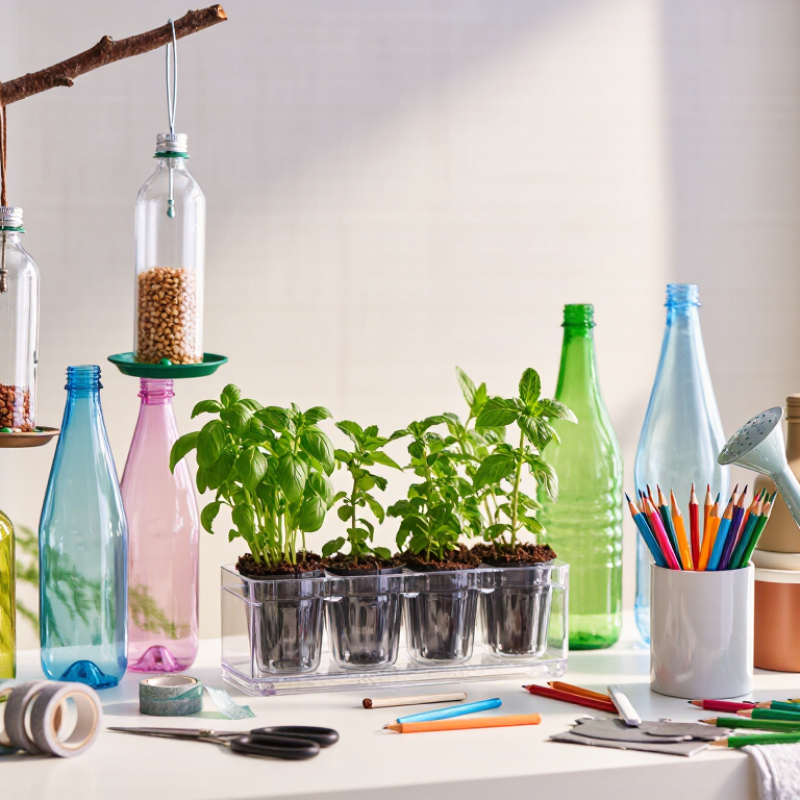
10 Best Creative Ways to Reuse Empty Plastic Bottles

Selecting and Preparing Empty Plastic Bottles for Safe Reuse

Selecting and Preparing Empty Plastic Bottles for Safe Reuse

Choose bottles that are clean, dry, and free from cracks, cloudiness, or strong odors. Clear, sturdy bottles are easy to inspect and cut for planters, scoops, or desk organizers. Check the resin code on the base, but treat it as a material identifier, not proof that a bottle is suitable for food contact. The OECD reported that only 9% of global plastic waste was recycled in 2019. Reusing a sound bottle for a non-food project can extend its useful life.

Wash bottles with warm water and dish soap, rinse thoroughly, and let them dry completely before crafting. Remove labels and sticky residue so you can spot damage. If a bottle held chemicals or its previous contents are unknown, do not repurpose it for household use. Avoid heating plastic or storing food and drinks in craft bottles. I sometimes find a bottle awkward to cut; that is a good reason to choose a simpler project.

Tips: Use scissors for thin plastic, and have an adult handle sharp tools. Smooth cut edges with sturdy tape. Keep finished projects away from heat and direct sunlight. Keep it simple.

Making Planters, Seed Starters, and Self-Watering Pots

An empty plastic bottle can become a useful planter with a few careful cuts. For a simple pot, trim off the top, pierce several drainage holes in the base, and set it on a shallow saucer. A crooked edge is harmless; a bottle that tips over is not. Add potting mix and a small herb or flower, leaving room for water to drain. The OECD’s Global Plastics Outlook reports that 353 million tonnes of plastic waste were generated worldwide in 2019, and only 9% was recycled. That global figure cannot measure one household’s impact, but reusing a clean bottle gives it another practical purpose.

For seed starters, cut a bottle in half and poke drainage holes in the bottom section. Fill it with seed-starting mix, label the plant, and water gently; a clear upper section can act as a loose humidity cover. Leave a small air gap to reduce condensation and mold. For a self-watering pot, thread a cotton strip through a hole in the bottle cap, then place the cap end into the soil. Keep the lower bottle section filled with water, and let the strip wick moisture upward. Check the soil anyway. Wicks can dry out, and seedlings still need light, airflow, and attention. Wash bottles well, smooth or cover sharp cut edges, and replace any that become brittle or cracked.

Creating Household Organizers, Scoops, and Storage Containers

An empty plastic bottle can become a practical organizer for a kitchen drawer, craft table, or garage shelf. Wash it with warm, soapy water, remove the label, and let it dry fully. Cut off the top to make a holder for pens, paintbrushes, or charging cables. For a small scoop, shape the bottle around its handle and smooth every cut edge. The result may look a little rough. It can still be useful.

For storage, turn a clean bottle into a container for buttons, clothespins, or screws. Keep the cap on, and add a paper label so small items are easy to find. The OECD’s 2022 Global Plastics Outlook reports that only 9% of plastic waste was recycled worldwide in 2019. Reusing a bottle will not solve that problem, but it can extend the life of an item already at home. Avoid storing food or liquids in cut bottles, and discard any bottle that is cracked or difficult to clean.

Tips: Use sturdy bottles, mark cut lines before trimming, and cover sharp edges with suitable tape. Keep organizers away from heat. Check them now and then; a homemade container can wear out, too.

10 Best Creative Ways to Reuse Empty Plastic Bottles - Creating Household Organizers, Scoops, and Storage Containers

Reuse Project Bottle Type and Approximate Size Basic Method Useful For Practical Note
Desk supply organizer 1–2 L bottle; about 8–10 cm wide Cut off the top, smooth or cover the cut edge, and use the base as a cup. Pens, markers, scissors, and rulers Choose a stable, flat-bottomed bottle to reduce tipping.
Dry-goods storage container 1.5–2 L bottle; roughly 1.5–2 L capacity Wash and dry thoroughly, then store lightweight dry items with the original cap. Craft supplies, buttons, or dry pantry items Use only bottles that held food or drink for pantry storage; keep contents dry.
Garden soil scoop 2 L bottle; about 2 L capacity Cut diagonally from the side toward the neck, leaving the handle and cap area intact. Potting mix, compost, or birdseed Smooth the cut edges and avoid using it for hot materials.
Drawer divider cups 500 mL–1 L bottles; cut to 5–8 cm tall Cut several bottle bases to matching heights and arrange them in a drawer. Batteries, clips, hair ties, and small tools Measure the drawer first so the cups fit without crowding.
Hanging bathroom caddy 1–1.5 L bottle; about 20–28 cm tall Cut a wide opening in one side and make two small holes near the top for hanging. Sponges, washcloths, or lightweight toiletries Add drainage holes at the bottom if the caddy may get wet.
Seed-starting pot 500 mL–1 L bottle; cut to 8–12 cm tall Use the bottom section as a small pot and pierce several drainage holes. Starting herbs or small vegetable seedlings Place it on a tray and transplant seedlings when they outgrow the container.
Plastic-bag dispenser 1.5–2 L bottle; about 30 cm tall Remove both ends, smooth the edges, and pull bags out through the bottle neck. Storing and dispensing clean, dry shopping bags Mount it securely or place it upright in a cupboard.
Funnel for household tasks 500 mL–1.5 L bottle; neck opening typically 2–3 cm Cut off the bottle base and use the neck end as a funnel. Transferring dry materials or non-food liquids Keep separate from food use unless it is thoroughly cleaned and suitable for that purpose.
Small-parts storage jar 500 mL bottle with original screw cap Keep the bottle intact, clean it, and label the outside before filling. Screws, beads, buttons, or craft pieces Store small parts away from young children and pets.
Sponge holder with drainage 1 L bottle; cut section about 8–10 cm wide Cut a shallow holder from the bottle side and add small drainage holes underneath. A kitchen or utility-room sponge Rinse regularly and replace it if the plastic becomes cracked or brittle.

Safety: Wash bottles before reuse, use scissors or a craft knife carefully, and cover or smooth all cut edges. Do not reuse containers that held chemicals for food or drink.

Building Bird Feeders and Other Helpful Outdoor Tools

An empty plastic bottle can become a simple bird feeder with a few careful cuts. Rinse it well and let it dry completely. Ask an adult to make two small feeding openings opposite each other, above the bottle’s base. Smooth every cut edge; rough plastic can injure birds or hands. Slide clean wooden spoons through the openings to create perches, then add a small amount of seed. Hang the feeder from a sturdy branch, where cats cannot easily reach it. The first version may tilt. Adjust the openings until the spoons sit level.

Bottles can help with other outdoor tasks, too. Cut one in half to make a lightweight scoop for potting soil or birdseed. Turn another into a slow-watering aid by making a few tiny holes in its cap, filling it with water, and placing it near a garden plant. Test the flow before leaving it in the soil; holes can clog, and too much water may harm roots. Reuse works best when the bottle stays clean and sturdy. Replace it if sunlight makes the plastic brittle.

Tips: Wash feeders regularly with hot, soapy water and let them dry before refilling. Put out only enough seed for a few days, especially in damp weather. Check edges and hanging points often. A homemade feeder may look uneven, but safe and clean matters more than perfect.

Crafting Decorations, Toys, and Creative Home Accents

A clean, dry plastic bottle can become a bright flower for a windowsill or a small hanging decoration. Cut the bottle below its neck, then snip the remaining plastic into broad petals. Round the edges with scissors, and paint the outside with water-based craft paint. For a hanging piece, punch a hole near the top and thread through string. Keep it simple. Uneven petals are normal, and they can make the flower look charmingly handmade. Avoid sharp points, and keep cut pieces away from young children.

For a practical accent, trim a bottle into a desk organizer for pencils, brushes, or charging cables. Cover the cut rim with fabric tape, checking that no rough edges remain. You can also turn several clean bottles into bowling pins for a gentle indoor game; leave them empty so they fall easily. Older children can decorate the pins with paper shapes, with an adult handling any cutting. A bottle planter works well for small herbs, but add drainage holes and place a saucer underneath. These projects are inexpensive, though the plastic may bend or fade over time. That is worth considering before making something meant to last.

FAQS

How can I turn a plastic bottle into a planter?

Trim off the top, make drainage holes in the base, and set it on a shallow saucer. Add potting mix and a small herb, leaving space for water to drain. A crooked rim is fine; tipping is not.

Can a bottle help start seeds?

Yes. Cut a bottle in half and add drainage holes to the bottom section. Fill it with seed-starting mix and label the plant. The clear top can act as a loose cover, but leave an air gap to reduce condensation and mold.

How does a bottle self-watering pot work?

Thread a cotton strip through a hole in the cap, then place the cap end in the soil. Keep the lower section filled with water so the strip can wick moisture upward. Check the soil anyway. Wicks can dry out.

How do I make a simple bird feeder?

Rinse and dry a sturdy bottle. Ask an adult to make two feeding openings, then smooth every cut edge. Slide clean wooden spoons through as perches and add a little seed. Hang it securely, away from cats.

Can bottles help with garden watering?

Make a few tiny holes in a bottle cap, fill the bottle with water, and place it near a plant. Test the flow first. Holes may clog, and too much water can harm roots.

What decorations or home items can I make?

Cut broad petals below the bottle neck to make a small flower, or trim a bottle into a desk organizer. Cover the organizer’s rim with fabric tape and check for rough spots. Uneven petals are normal.

How should I clean and maintain these projects?

Wash bottles before use, and dry bird feeders fully before refilling. Put out only a few days’ worth of seed, especially in damp weather. Check edges and hanging points often. Replace cracked or brittle plastic.

Will these projects last a long time?

Not always. Sunlight can make plastic brittle, and decorations may bend or fade. A homemade project can be useful, but I would not assume every bottle is suitable for long-term use.

Conclusion

How to reuse empty plastic bottles creatively begins with choosing clean, undamaged containers and preparing them safely: remove labels, wash them thoroughly, and smooth any sharp cut edges. With a little care, bottles can become useful items for both indoors and out. Cut and decorate one to make a planter or seed starter, or create a self-watering pot that helps keep soil moist. Smaller sections can also serve as desk organizers, scoops, or handy storage containers for household odds and ends.

Outside, a bottle can be transformed into a simple bird feeder or another practical gardening aid. For a more playful project, use clean bottles to make decorations, toys, or colorful home accents. These ideas offer an easy way to give everyday materials a second life while encouraging creativity and reducing waste. Choose designs suited to the bottle’s shape, and make sure each finished project is sturdy and safe to handle.

Amelia

Amelia

Amelia is a seasoned marketing professional with a wealth of expertise in our company’s core offerings. With an unwavering passion for driving growth and innovation, she plays a pivotal role in shaping our marketing strategies and enhancing brand visibility. A key aspect of her responsibilities......