Bluesky Bottle
Choosing the best plastic bottles for kids from China requires more than comparing prices, colors, or factory photos. The bottle touches a child’s mouth daily, often with warm milk, juice, or water inside. Material, closure design, manufacturing controls, and supplier transparency all matter. The OECD Global Plastics Outlook reports that global plastic waste reached 353 million tonnes in 2019, twice the 2000 level. Packaging represented about 40% of that waste. These figures show why careful product selection cannot be treated as a minor purchasing detail.
Parents and importers searching “How to choose safe plastic bottles for kids” should begin with verified food-contact materials. Polypropylene and certified Tritan products may offer useful options, but the material name alone proves little. Ask Chinese suppliers for batch-level declarations, migration-test results, temperature limits, and traceable factory information. Check the cap, silicone seal, straw, and printed surface too. Small parts can trap cloudy residue. A bottle may look perfect and still be difficult to clean.
Dr. Leonardo Trasande, an environmental health expert, has warned, “There is no safe level of exposure to endocrine-disrupting chemicals.” His statement supports a precautionary approach, not panic. The World Health Organization’s 2019 report, Microplastics in Drinking-water, also notes important evidence gaps. That matters. Evidence is incomplete, and marketing claims can sound more certain than science. A responsible buying guide should compare independent testing, cleaning performance, leak resistance, and supplier records before recommending any bottle. The cheapest sample is rarely the safest conclusion.
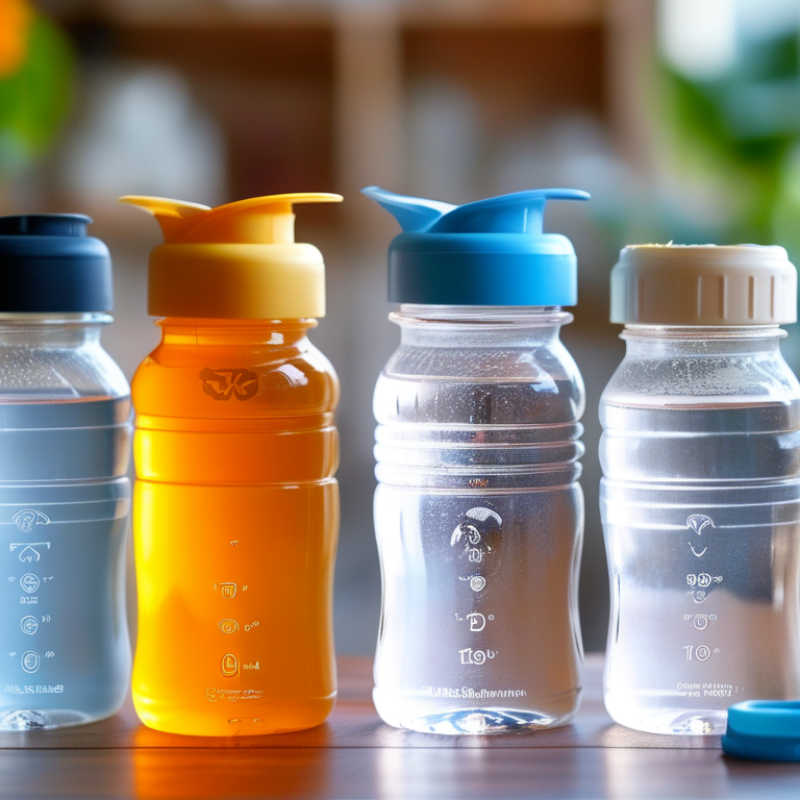
Choosing the best plastic bottle for kids from China starts with clear selection criteria. Capacity should match the child’s age, daily routine, and carrying ability. For preschoolers, 300–400 milliliters is usually manageable. Older children may need 500–750 milliliters for school or sports. A full bottle should not feel like a small weight in a child’s backpack.
Age range also affects the lid, mouthpiece, and grip. Toddlers need simple, leak-resistant designs with larger handles and fewer removable parts. Children over six may use a wider opening for easier cleaning. The American Academy of Pediatrics recommends water as the main drink for young children, so the bottle should support frequent water use, not sugary beverages. Avoid assuming that a larger bottle is automatically better. It may encourage overfilling and become difficult to carry.
Intended use must be defined before contacting Chinese manufacturers. A classroom bottle needs quiet opening, strong impact resistance, and easy labeling. A sports bottle needs fast flow and secure sealing. For travel, compact dimensions matter more than maximum capacity.
Grand View Research valued the global reusable water bottle market at approximately US$8.6 billion in 2023, showing strong demand but also intense supplier competition. Ask for material specifications, migration testing, drop-test records, and production samples. GB 4806.7 compliance documentation is useful for plastic food-contact products, but paperwork alone is not proof of consistent quality. I would inspect several batches. One sample can flatter a supplier.
How to Choose the Best Plastic Bottles for Kids from China?
When screening children’s bottles, start with the resin code molded into the base. Code 1 means PET, which is lightweight and clear. It suits cold drinks but is not my first choice for repeated hot use. Code 2 identifies HDPE, a sturdy plastic often used for opaque bottles. It handles daily handling well.
Code 4 represents LDPE, a softer material that can feel flexible in small hands. Code 5 means PP, which is commonly selected for reusable drinkware and warm liquids. Still, the number alone does not prove food-contact safety. It only identifies the main plastic type. Check the bottle, cap, gasket, and straw separately.
Look closely.
For Chinese suppliers, request food-contact declarations, migration-test reports, and batch traceability documents. The testing should match the intended use, including temperature, drink acidity, and contact time. Ask whether the bottle was tested as a complete assembly, not only as a plastic sample. I have seen attractive bottles fail practical checks because caps retained odors or threads trapped residue. That detail is easy to miss. Wash a sample by hand and inspect it after several cycles. Also check sharp edges, loose parts, and unclear markings. A code 5 bottle may still be poorly manufactured. My own screening is cautious, and sometimes I reject a suitable material because the documentation feels incomplete. That may seem strict, but children’s products deserve fewer assumptions.
Use the resin identification code as an initial screening tool, then verify food-contact compliance, intended use, and migration-test documentation for the finished bottle.
| Resin Code | Plastic Type | Typical Bottle Characteristics | Suitable Uses | Key Advantages | Important Limitations | Screening Result |
|---|---|---|---|---|---|---|
| 1 | PET Polyethylene Terephthalate |
Clear, lightweight, and commonly made as a rigid single-use beverage bottle. | Cold water and other non-hot beverages when the finished container is specifically designed and tested for that use. | Good transparency, low weight, good gas barrier compared with many other common packaging plastics, and high commercial availability. | Usually not the first choice for repeated refillable use. Avoid hot liquids unless the manufacturer provides a validated hot-fill specification. Surface scratches and heat can reduce performance. | Conditional Best for cold, defined-use applications |
| 2 | HDPE High-Density Polyethylene |
Opaque or translucent, lightweight, and relatively rigid with good impact resistance. | Cold beverages, milk-style liquids, and durable bottles designed for normal household use. | Good toughness, moisture resistance, chemical resistance, and low-temperature performance. | Less transparent than PET. It is not automatically suitable for hot liquids, dishwashers, or repeated reuse without product-specific testing and instructions. | Good Option For cold-use bottles with verified compliance |
| 4 | LDPE Low-Density Polyethylene |
Flexible, soft, and squeezable; often used for specialty containers or flexible components. | Squeeze bottles and flexible food-contact components when the design provides adequate leak control and mechanical strength. | Good flexibility, impact resistance, moisture resistance, and performance at low temperatures. | Lower stiffness than HDPE or PP. It may deform more easily and is generally not preferred for hot-fill or high-temperature applications unless specifically validated. | Conditional Useful when flexibility is required |
| 5 | PP Polypropylene |
Rigid or semi-rigid, lightweight, and available in translucent or opaque forms. | Reusable children's bottles, drinking cups, and containers designed for warm or cold beverages, subject to the product's tested temperature range. | Higher heat resistance than PET, HDPE, and LDPE in many applications; good fatigue resistance and suitable stiffness for reusable designs. | Heat resistance varies by grade, wall design, closures, seals, and manufacturing process. Do not assume microwave or dishwasher suitability from code 5 alone. | Preferred For reusable designs with validated conditions |
Note: A resin identification code identifies the primary plastic resin; it does not by itself certify food-contact safety, chemical composition, product quality, or suitability for repeated use.
How to Choose the Best Plastic Bottles for Kids from China?
CPSIA verification should guide every purchasing decision. The U.S. Consumer Product Safety Commission limits lead to 100 ppm in accessible parts. It also restricts certain phthalates to 0.1% in children’s products. A bottle may look clean, but appearance proves nothing. Request independent laboratory testing for the exact bottle, cap, straw, and printed surface. Testing only the resin pellet can miss contamination introduced during molding or decoration.
The CPSC’s Children’s Product Certificate guidance requires test records from an accepted laboratory. Keep the report linked to the supplier, production date, material, and product model. Ask whether the laboratory used current CPSC-accepted methods. Also check migration risks from colored coatings and soft seals. OECD’s Global Plastics Outlook estimates that global plastic production reached 460 million tonnes in 2019. That scale makes material traceability increasingly important. Still, large production does not guarantee safe production.
Tips: Ask for the full chemical test report, not a one-page certificate. Confirm lead results in ppm and phthalate results as percentages. Request samples from mass production. Inspect a cap under bright light; peeling ink or a strong odor deserves questions. Consider third-party factory audits, but do not treat an audit as chemical proof. My practical mistake was trusting a supplier’s old report too quickly. Reports can expire when formulas, molds, or subcontractors change. Re-test after any material or design change.
CPSIA screening thresholds for accessible plastic components
Under the U.S. Consumer Product Safety Improvement Act (CPSIA), the maximum lead content in a children's product is 100 ppm. For applicable regulated phthalates, the limit is 0.1%, equivalent to 1,000 ppm. These are regulatory limits, not product test results; suppliers should provide accredited laboratory reports for the finished bottle and its accessible components.
When sourcing children’s plastic bottles from China, ask for EN 14350:2020 testing evidence. This standard covers drinking equipment safety, including leakage, mechanical durability, and thermal performance. Do not accept a simple “EN 14350 approved” statement. Request the complete laboratory report, product photos, tested model number, and production material details. The report should match the bottle you plan to order.
Leakage testing should examine the cap, seal, valve, and connection points. A bottle may pass when upright but leak inside a schoolbag. Durability testing checks drops, pulls, and repeated use. Look for test conditions that reflect daily handling, not only factory inspection. Thermal safety also matters. Confirm whether the tested bottle tolerates warm liquids and whether hot surfaces create burn risks. EN 14350:2020 evidence is useful, but it does not replace checking your target market’s requirements.
Tips: Ask for samples from the same batch. Fill one overnight and place it sideways. Test the lid after repeated opening. Review the plastic type and temperature limits carefully. A clean report can still miss a weak hinge or poorly fitted gasket. This is where sourcing decisions often need another review.
How to Choose the Best Plastic Bottles for Kids from China?
An ISO 9001 certificate is a useful starting point, not a safety guarantee. The ISO Survey 2022 recorded more than 1.26 million ISO 9001 certificates worldwide. However, certification mainly assesses quality-management processes. It does not prove that every children’s bottle meets food-contact requirements. During a factory audit, check the certificate scope, issuing body, expiry date, and production site address. Then compare those details with the supplier’s business license and actual workshop.
Ask for a COA for every material and production lot. It should identify the resin, batch number, test date, laboratory, and tested limits. A vague “food grade” statement is not enough. I prefer COAs that match the exact bottle, cap, straw, seal, and printed parts. Small components can hide larger problems. Request independent testing from an ISO/IEC 17025-accredited laboratory. Tests should cover overall migration, specific migration, heavy metals, BPA, phthalates, odor, and color transfer, according to the destination market.
ECHA’s 2023 enforcement project found non-compliance in 18% of 2,407 inspected products. That figure makes document-only purchasing uncomfortable. Sample finished bottles from normal production, not only polished showroom samples. Repeat tests after mold changes, resin substitutions, or new suppliers. I still treat a perfect PDF with suspicion. One audit can pass while the next batch fails. An auditor should also watch washing, drying, storage, and packing beside the production line. Those ordinary details are easy to overlook.
Lead in accessible parts should not exceed 100 ppm. Certain phthalates should remain below 0.1%. Appearance proves nothing.
Test the bottle, cap, straw, seal, and printed surfaces. Resin-only testing may miss contamination from molding or decoration.
Request the complete laboratory report, not a one-page certificate. It should identify the product model, material, production date, and supplier.
Compare the report with mass-production samples. Check model numbers, photos, plastic types, colors, and cap designs. Small mismatches matter.
Inspect the cap, seal, valve, and connection points. Fill a bottle overnight and place it sideways. A schoolbag exposes weak seals.
Look for drop, pull, opening, and repeated-use tests. A bottle can appear sturdy but develop a loose hinge after daily handling.
Confirm the permitted liquid temperature and surface temperature. Warm drinks may be acceptable, while hot surfaces can create burn risks.
No. Audits review operations, not every chemical risk. Independent testing remains necessary. I once trusted an old report too quickly.
Retest after changing materials, formulas, molds, colors, or subcontractors. Reports can become irrelevant after production changes. This deserves another review.
How to choose safe plastic bottles for kids begins with defining the product’s purpose. Consider the bottle’s capacity, the child’s age, and whether it will be used for water, milk, juice, school, travel, or daily activities. For food-contact applications, screen materials marked with plastic codes 1, 2, 4, or 5, while also requesting documentation that confirms suitability for children’s products. Material selection should be combined with practical checks for secure closures, easy cleaning, comfortable handling, and reliable leak prevention.
Next, confirm that the product meets applicable safety requirements. Verify CPSIA test results showing lead at no more than 100 ppm and phthalates at no more than 0.1%. Request EN 14350:2020 testing or equivalent documentation covering leakage, durability, and thermal safety. Finally, audit Chinese suppliers by reviewing ISO 9001 certification, current certificates of analysis, production controls, and independent third-party test reports. A careful review of specifications, samples, and compliance records helps buyers select dependable bottles for children.
