Bluesky Bottle
Why are some plastic bottles not recyclable, even when they carry a recycling symbol? The answer often lies in their design, not simply in the plastic itself. A clear PET bottle with a compatible cap may be accepted locally. A dark-colored bottle, a full-body sleeve, mixed materials, or hard-to-remove adhesive can make sorting and processing more difficult. Local collection rules matter, too. A package may be technically recyclable but still lack a practical route through a particular recycling system.
The scale of the challenge is clear. The OECD’s Global Plastics Outlook reports that only 9% of plastic waste worldwide was ultimately recycled in 2019. That figure covers plastics broadly, not bottles alone, but it shows why recyclability claims deserve careful scrutiny. UNEP Executive Director Inger Andersen has urged action with the words, “We need to turn off the tap on plastic pollution.” Her statement points beyond disposal: bottle makers must also consider material choices, labels, colors, and ease of separation.
This introduction examines China’s leading bottle makers through that practical lens. It asks whether their packaging can be collected, sorted, and recycled—not merely whether a resin code appears on the base. A label that peels cleanly matters. So does a bottle that reaches a capable facility. Rankings can be useful, but they cannot prove that every product is recyclable everywhere. That distinction is easy to miss. And it deserves a closer look.
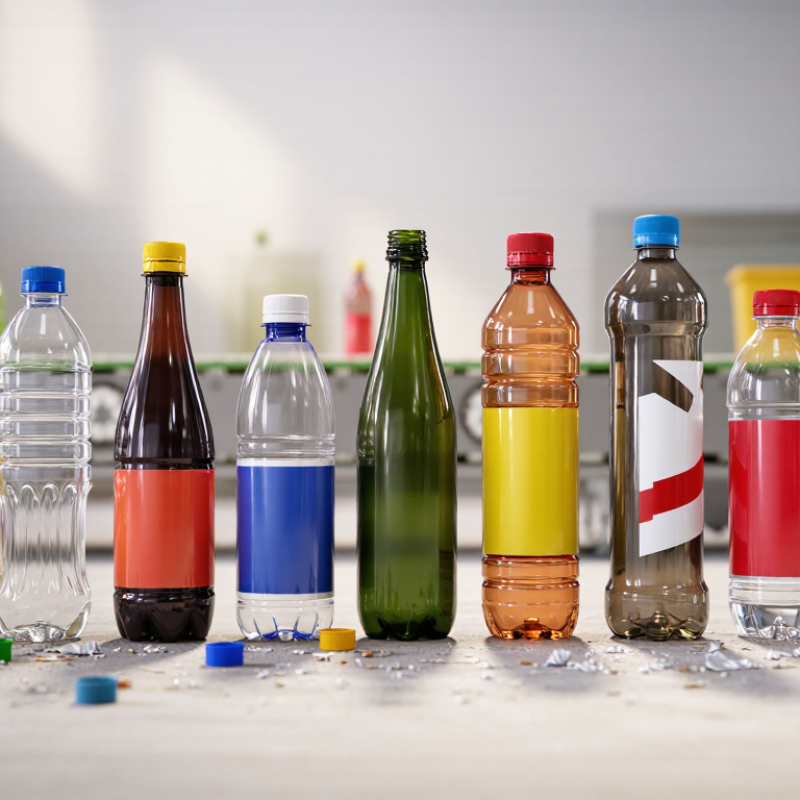
China’s bottle industry serves beverage, food, personal-care, and household-product manufacturers. Production ranges from standardized containers to custom shapes designed for specific filling lines. PET bottles are common for water and soft drinks because they are light and can be formed efficiently through injection stretch blow molding. HDPE bottles, often opaque and squeezable, suit shampoos, detergents, and some food products. The differences matter.
Glass remains important for beverages, sauces, and products needing a strong barrier. Manufacturers melt raw materials and shape the hot glass in molds; weight and transport costs are practical trade-offs. Aluminum bottles appear in selected drink and personal-care markets. They are durable, but coatings and closures affect processing after use. China’s manufacturing base includes material suppliers, mold makers, bottle producers, and filling-equipment partners. Design choices often reflect line speed and cap fit, not appearance alone.
Buyers comparing bottle types should check neck finish, wall thickness, capacity, and filling-temperature compatibility. A sample that looks sturdy may still deform on a warm filling line. Recyclability also depends on material combinations, color, labels, and local sorting systems; the bottle body is only part of the package. This overview is incomplete: regional capabilities and quality controls vary, and published specifications do not always reveal production consistency. Small details deserve testing.
China’s bottle-making sector includes large automated plants and smaller specialist workshops. These ten anonymized profiles show how production choices shape each bottle. A beverage-bottle maker may use lightweight PET and fast molding lines. A returnable-glass producer focuses on thick walls and repeated washing. A household-container maker often molds HDPE for detergents and personal-care products. An amber-glass maker serves products that need protection from light. Details matter.
An edible-oil bottle maker may favor clear PET for visibility and low weight. A dairy-packaging producer often uses opaque HDPE to limit light exposure. A large-format water-container maker must balance impact resistance with manageable weight. A cosmetics specialist may combine several plastic layers for appearance or product protection. A barrier-packaging producer can use mixed materials that complicate sorting. A custom converter may handle short runs, unusual shapes, or locally tailored orders.
These are production profiles, not rankings of individual companies. A bottle’s recycling prospects depend on its material, color, labels, caps, and local collection systems.
Clear, single-material packaging is generally easier to sort than dark or layered designs. Yet a technically recyclable bottle may still be rejected where suitable facilities are absent.
Factory visits can reveal practical details, such as resin storage, quality checks, and scrap handling. One limitation remains: public information rarely shows how consistently each plant applies these practices.
A bottle’s body does not tell the whole recycling story. PET and HDPE bottles are widely accepted in many collection systems, but local sorting equipment and market demand determine what happens next. The cap may use polypropylene or another resin, while the label, adhesive, and sleeve add different materials. Small differences matter.
A full shrink sleeve can hide a bottle’s resin code from optical sorters. Dark pigments may also be difficult for some sorting systems to detect. Pumps are more complicated: they can combine plastic, metal springs, and several small parts. That matters. Even when a component is technically recyclable, a facility may not separate it efficiently. Check local collection guidance rather than assuming every marked package belongs in the recycling bin.
For bottle makers, simpler designs usually give recyclers a better chance. A clear bottle, a compatible label, washable adhesive, and a cap that separates readily can reduce sorting problems. Yet no single design works everywhere. The awkward part is that packaging improvements can make a bottle easier to recycle in one region and still leave it unsupported elsewhere. Material choices should be tested against real collection and sorting conditions, not just a resin code.
| Bottle Material or Format | Typical Uses | Recyclability in Practice | Common Recycling Barriers | Design or Sorting Considerations |
|---|---|---|---|---|
| PET (polyethylene terephthalate, resin code 1) | Water, soft-drink, and some personal-care bottles | Often recyclable | Dark or opaque colors, non-PET sleeves, and incompatible labels can reduce sorting or recycled-material quality. | Clear or light-colored PET is generally easier to sort. Use compatible labels and closures, and check local collection rules. |
| HDPE (high-density polyethylene, resin code 2) | Milk, detergent, and household-product bottles | Often recyclable | Some collection systems exclude certain colors or shapes. Residual contents and attached non-HDPE parts can affect processing. | Empty the bottle and follow local guidance on whether to keep the cap on. Design labels and closures for easy separation or compatible processing. |
| PP (polypropylene, resin code 5) | Some reusable, food, and personal-care bottles | Program-dependent | Acceptance varies by location; some facilities do not sort or process PP containers even when the material is technically recyclable. | Confirm local acceptance rather than relying on the resin code alone. Avoid confusing bottle parts made from different plastics. |
| PVC (polyvinyl chloride, resin code 3) | Specialty containers and some non-beverage packaging | Rarely accepted in bottle programs | PVC is uncommon in standard bottle-recycling streams and can contaminate PET recycling if mistakenly mixed in. | Clearly identify the material and keep PVC containers out of PET bottle collections unless a local program specifically accepts them. |
| Multilayer plastic | Barrier bottles for products sensitive to oxygen or light | Usually limited | Layers of different polymers may be difficult to separate economically, so the container may not fit conventional single-polymer recycling streams. | Use a single material where product requirements allow, or verify that a dedicated collection and processing route exists. |
| Glass | Beverage, food, and cosmetic bottles | Often recyclable where collected | Collection systems may separate glass by color. Ceramics, heat-resistant glass, mirrors, and stones can contaminate glass recycling. | Separate by color if required locally. Remove contents; follow local instructions for lids, pumps, and other attached components. |
| Aluminum | Drink bottles and lightweight specialty containers | Recyclable where accepted | Plastic liners, mixed-material fittings, and non-removable components can complicate sorting and material recovery. | Keep the container separate from incompatible materials and check local acceptance. A metal bottle is not automatically accepted in every curbside program. |
| Stainless steel | Reusable water and insulated bottles | Recyclable through suitable channels | Reusable bottles are often too durable or complex for ordinary household packaging collection; insulation and mixed-material parts may need separation. | Use a metal-recycling or product take-back route where available. Remove detachable plastic, silicone, or electronic components if instructed. |
| Paperboard composite with plastic or foil layers | Carton-style beverage containers | Facility-dependent | Paper fibers must be separated from polymer and, in some formats, aluminum layers; not all facilities have the required equipment. | Place in recycling only where cartons or composite packaging are specifically accepted. Empty the container and follow local preparation instructions. |
| PLA (polylactic acid, a bio-based plastic) | Some beverage and specialty bottles | Not usually recyclable with PET | PLA requires suitable dedicated processing and can contaminate conventional PET recycling if mixed into that stream. | Do not assume “bio-based” means home-compostable or curbside-recyclable. Use a collection route that explicitly accepts PLA. |
Important: Recyclability depends on local collection rules, sorting equipment, and available processors. Resin identification codes describe a material type; they do not guarantee that a bottle is accepted for recycling in a particular area.
A bottle can carry a recycling symbol and still be rejected by a local sorting facility. The symbol may identify its material, not guarantee that nearby equipment can process it. Dark pigments can confuse optical scanners, while small bottles may slip through sorting screens. Looks simple. Often isn’t.
Bottle construction matters too. A rigid container paired with a metal spring, silicone valve, or permanently attached pump may contain materials that standard systems cannot separate efficiently. Full-wrap labels can also hide the bottle’s base material from scanners. Leftover lotion or soap can complicate handling, although rinsing alone cannot fix an incompatible design. Local rules and equipment vary, so check your municipality’s guidance rather than assuming every container follows the same path.
Tips: Empty the bottle, separate removable parts, and check local instructions. When choosing packaging, look for a single material and easily removable labels or closures. Small details count. Designers can make recycling easier, but even well-designed packaging may not be accepted everywhere. That gap deserves more attention.
A bottle’s recycling claim deserves a closer look than its tidy label. The OECD’s Global Plastics Outlook (2022) estimated that only 9% of global plastic waste was recycled in 2019. Design affects whether a bottle can move through sorting and reprocessing, not just whether it carries a recycling symbol. Looks simple. It isn’t.
When assessing a maker, ask what resin the bottle uses, whether its color is accepted locally, and whether labels and closures separate cleanly. The Association of Plastic Recyclers’ Design Guide explains how packaging features can affect recycling compatibility. A dark bottle, oversized sleeve, or hard-to-remove adhesive may complicate sorting or reduce material quality. Check the maker’s published specifications, recycled-content claims, and evidence that its packaging is collected and processed in the markets it serves. A percentage alone is not enough; ask what the figure measures and which year it covers. I would also request test results or guidance from a qualified recycler. These details can be difficult to verify, and a well-designed bottle still depends on local collection systems. The uncomfortable question is whether the maker tracks what happens after sale.
PET is lightweight and efficiently formed through injection stretch blow molding. It may still deform during warm filling.
HDPE bottles are often opaque and squeezable. They suit shampoos, detergents, and some food products.
Glass provides a strong barrier for beverages, sauces, and light-sensitive products. Its weight can increase transport costs.
Check neck finish, wall thickness, capacity, and filling-temperature compatibility. A sturdy-looking sample may not suit a warm filling line.
No. Local collection and sorting systems determine whether packaging can be processed. It depends.
Dark colors, layered materials, oversized sleeves, and hard-to-remove adhesives may complicate sorting or lower material quality.
Ask what the percentage measures, which year it covers, and whether test results or recycler guidance are available. Details matter.
Not fully. Public information may omit routine checks, resin storage, and scrap handling. A factory visit can reveal more, but it is not proof of every batch.
China’s bottle manufacturing industry produces a wide range of containers for food, beverages, personal care, and household products. This overview introduces common bottle types and profiles ten major makers by considering their product focus, manufacturing capabilities, and approach to design. It also explains how materials such as PET, HDPE, glass, and multilayer combinations, along with caps, labels, adhesives, and sleeves, can affect whether a bottle is suitable for recycling.
Why are some plastic bottles not recyclable through standard systems? A bottle may use mixed or difficult-to-separate materials, contain components that interfere with sorting, or be made from a resin that local facilities do not process. The article outlines these challenges and offers practical ways to assess a maker’s recycling practices, including checking material choices, component compatibility, labeling, and design for easy separation. These considerations can help buyers compare suppliers and choose bottles that better fit available recycling systems.
