Bluesky Bottle
Plastic bottles can look identical on a supplier’s website, yet differ in resin, production controls, and documented testing. OECD’s Global Plastics Outlook reports that global plastic production reached 460 million tonnes in 2019. Packaging represented the largest share of plastic use. That scale makes supplier selection more than a price comparison.
This guide to China’s top plastic bottle suppliers focuses on practical checks buyers can request and verify. How to check if a plastic bottle is safe starts with identifying its intended use, resin type, and contact conditions. Ask for clear material specifications, batch traceability, and test reports from a qualified laboratory. Review whether the reports cover the actual bottle, cap, colorants, and intended contents. A certificate alone may not answer every question.
Look closely at the evidence. Does the report name the tested sample? Are dates, methods, and results visible? Can the supplier explain how production lots are controlled? For food-contact packaging, migration testing and relevant market requirements deserve particular attention. A clean-looking bottle is not proof of safety. Nor does a polished brochure establish consistent quality.
The shortlist should help buyers compare suppliers on transparency, testing, and manufacturing capability—not merely claims or catalog photos. PlasticsEurope’s Plastics—The Fast Facts 2024 estimates global plastics production at 413.8 million tonnes in 2023, using a different reporting scope and year than OECD. Figures need context. Supplier verification does too. Even careful checks have limits; independent testing may still be necessary before approving a bottle for a specific product.
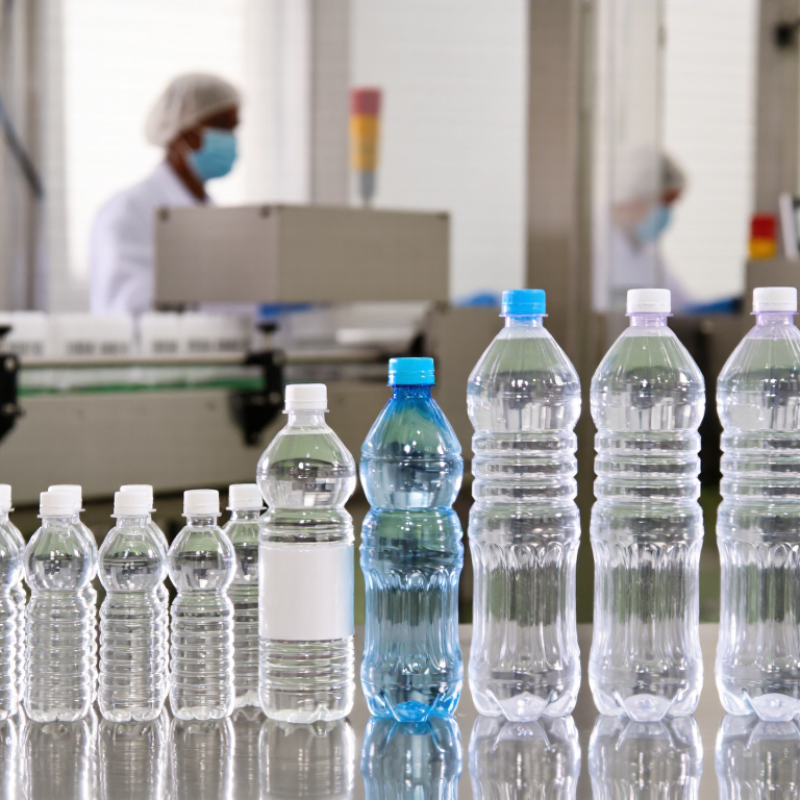
China’s plastic bottle supplier landscape is broad, not a single factory model. Suppliers may specialize in PET beverage bottles, HDPE containers for personal care, or PP jars and closures. Others offer preforms, caps, labels, and custom molds alongside finished bottles. This matters: a supplier focused on lightweight water bottles may not have the right equipment for a thick-walled cosmetic container. OECD’s Global Plastics Outlook (2022) estimates packaging produced about 40% of global plastic waste in 2019. Packaging is a large category, but that figure covers more than bottles.
China’s National Bureau of Statistics reported 74.885 million tonnes of plastic products in 2023. That figure covers many product types, not bottle output alone. It still signals a large manufacturing base, with suppliers differing in scale, specialization, and in-house testing. Ask which resin grades and bottle weights they produce, then request samples and inspection records for the exact item. Small details matter. A cap that fits loosely can leak during transport, even when the bottle looks sound.
Compare suppliers by product category and process control, not catalog size. Check whether the same site makes the bottle, or outsources molding and decoration. Review material specifications, batch traceability, and test methods for leakage, drop resistance, and closure fit. The PlasticsEurope report Plastics – the Fast Facts 2023 says packaging represented 39% of European plastics demand in 2022; this is a regional measure, not a China market share. I would treat broad claims about “food-grade” quality cautiously unless the supplier can show relevant, current documentation. That extra verification can feel tedious. It is still worth doing.
When comparing ten plastic bottle suppliers, look beyond catalog photos and quoted prices. Ask for the same bottle specification from each: capacity, resin type, neck finish, wall thickness, and intended filling conditions. A supplier that clarifies these details is easier to assess than one offering a quick, vague estimate. Small differences matter.
Request sample bottles and inspect them under consistent conditions. Check for uneven walls, rough seams, loose caps, and deformation after filling. Ask how the supplier controls resin batches, mold wear, and production variation. Useful evidence includes inspection records, test methods, and clear explanations of what each test can and cannot prove. Numbers matter, but context matters too.
Compare production capacity against your actual order size and delivery schedule. Ask for typical lead times, minimum quantities, available mold changes, and how defects are handled. Confirm that samples come from a process representative of regular production; a polished sample alone may not tell the whole story. I would also note unanswered questions in a comparison sheet. It is easy to overvalue a low price, and supplier claims deserve verification rather than assumption. A short video walkthrough or a documented quality-control process can help reveal how work is managed day to day.
Use this evidence-based scorecard to compare ten shortlisted suppliers. It does not assign unverified scores or claim that any anonymous supplier is certified. Complete each supplier column only after reviewing current, supplier-specific documents and samples.
| Capability / safety check | What to verify | Useful evidence | Supplier 1 | Supplier 2 | Supplier 3 | Supplier 4 | Supplier 5 | Supplier 6 | Supplier 7 | Supplier 8 | Supplier 9 | Supplier 10 |
|---|---|---|---|---|---|---|---|---|---|---|---|---|
| Food-contact compliance | Confirm compliance for the destination market, resin, intended use, and contact conditions. Requirements differ by jurisdiction. | Applicable declarations of compliance and test reports; for EU plastic food-contact materials, check relevance to Regulation (EU) No 10/2011 and GMP Regulation (EC) No 2023/2006. | Record document number, scope, issuing laboratory, and expiry or review date for each supplier. | |||||||||
| Migration and chemical safety | Check that testing matches the exact bottle material, colorant, closures, use conditions, and destination-market requirements. | Full laboratory reports identifying samples, methods, test conditions, results, and laboratory details—not only a general certificate. | Record report reference and whether the tested sample matches the proposed production specification. | |||||||||
| Resin and recycled-content traceability | Verify resin grade, supplier, batch identification, and any recycled-content claims. Food-contact recycled plastic can be subject to additional market-specific rules. | Material specifications, batch records, supplier declarations, and applicable recycled-plastic approvals or process documentation. | Record traceability coverage and supporting documents; do not treat a claim alone as verification. | |||||||||
| Factory hygiene and contamination controls | Review controls for handling, storage, pest prevention, cleaning, foreign matter, and product protection during packing and shipment. | Current audit report, hygiene procedures, cleaning records, and corrective-action evidence. | Record audit date, audit scope, findings, and closure status. | |||||||||
| Quality management and process control | Check whether documented controls cover incoming materials, production, inspection, nonconforming product, and corrective actions. | Quality manual or process overview, relevant audit records, inspection plans, and any current management-system certificate with verified scope. | A management-system certificate does not by itself establish food-contact compliance. | |||||||||
| Product specifications and dimensional consistency | Compare agreed drawings and tolerances for capacity, neck finish, weight, wall distribution, and closure fit. | Approved drawings, signed specifications, inspection records, and measurements from pre-production samples. | Record pass/fail against the buyer-approved specification and sample. | |||||||||
| Performance testing | Select tests relevant to the product and use, such as leak, top-load, drop, or temperature-resistance testing. | Test method, sample size, acceptance criteria, results, and production-lot linkage. | Agree test conditions and limits before comparing supplier results. | |||||||||
| Production capacity and delivery control | Assess demonstrated output for the required bottle design, available equipment, tooling status, and ability to meet the requested schedule. | Production plan, machine and mold details, recent comparable order records, and on-time delivery data with a stated measurement period. | Compare like-for-like product and time periods; distinguish stated capacity from demonstrated output. | |||||||||
| Traceability and complaint response | Confirm that finished goods can be linked to production lots and that complaints, recalls, and corrective actions have documented procedures. | Sample lot records, traceability exercise results, complaint workflow, and recall or withdrawal procedure. | Record the time and completeness of a documented traceability exercise. | |||||||||
| Packaging and shipment protection | Review packaging cleanliness, protection from damage or contamination, pallet configuration, and shipping identification. | Packaging specification, shipment photos, packing-list example, and agreed transit or arrival inspection criteria. | Record observed sample condition and agreed packaging corrective actions. | |||||||||
Comparison rule: mark each check as Verified, Needs follow-up, or Not provided, and retain the supporting evidence. Confirm applicable legal requirements with the relevant regulator or qualified compliance specialist for the product’s destination market.
When comparing plastic bottle suppliers, ask for documents tied to the exact resin, colorant, and bottle design—not a generic certificate. Request a current food-contact declaration for your intended market, plus migration-test results showing the test conditions: food type, temperature, and contact time. Check that the report identifies the tested material and production site. A report for clear bottles may not cover a colored version. Small detail. It matters.
The OECD’s 2022 Global Plastics Outlook estimated that only 9% of plastic waste was recycled worldwide in 2019. That figure does not prove recycled resin is unsafe; it does make traceability important. If a bottle contains recycled material, ask for its source, percentage, batch records, and evidence that its use is suitable for the intended food contact. Verify that test reports come from a laboratory accredited to ISO/IEC 17025, and confirm the accreditation covers the relevant tests. Don’t rely on a logo alone.
Compare document dates, product codes, and supplier names across the declaration, test report, and purchase specification. Ask who controls changes to resin or additives, and whether a change triggers retesting. Requirements vary by market, so have a qualified compliance professional review the file before approval. Honestly, paperwork can still miss a production change; retain samples and check incoming lots against agreed specifications.
A plastic bottle can look clean and still have weak points.
Check the neck, base, seams, and cap fit under bright light. Small cracks or uneven walls deserve attention. Ask the supplier for test records tied to the exact bottle material, color, and production batch. A general certificate is not enough.
Useful checks include wall-thickness measurement, drop testing with a defined fill level, leak testing, and repeated cap opening.
For packaging used with food or personal-care products, request applicable migration-test documentation from a qualified laboratory. Test conditions should match the intended contents, temperature, and storage period. Details matter.
A bottle that survives one drop may fail after transport vibration, so testing should reflect real handling. No single test proves everything.
Traceability connects those results to the bottles you receive.
Each delivery should link to a batch code, production date, resin documentation, and inspection record. Ask how rejected bottles are separated and how changes in material or tooling are recorded. Keep a few samples from each shipment for comparison.
It takes space. Still, those samples can help identify whether a later defect came from production, storage, or transport. Records can be messy in practice; review them periodically rather than assuming a file stays accurate forever.
A useful factory audit looks past polished samples and follows a bottle through production. Ask to see resin storage, molding or blowing equipment, trimming, and packing areas. Check whether material batches can be traced from delivery records to finished products. Compare actual inspection logs with the supplier’s written procedures. Look beyond the tour.
Watch how operators handle bottles and whether work areas are clean, well-lit, and clearly marked. Check machine guards, emergency exits, and the availability of protective equipment. Ask how staff report equipment faults and how corrective actions are recorded. A quick verbal assurance is not enough; request dated records and verify a few entries on the floor.
Review the supplier’s quality checks for dimensions, leakage, appearance, and any testing relevant to the bottle’s intended use. Confirm who approves a production batch and what happens when samples fail. Details matter. Speak with production staff, not only managers; their answers may reveal gaps between procedures and daily practice. A tidy sample room can be reassuring, but it cannot represent every shift. Note what you could not verify, and arrange follow-up evidence before relying on the audit.
Ask for a current food-contact declaration and migration-test results. They should match the exact resin, colorant, bottle design, and intended market.
Check the food type, temperature, and contact time. Confirm the report identifies the tested material and production site. Small detail. It matters.
Not necessarily. Colorants can change the material being assessed, so request documents for the specific bottle version.
Ask for its source, percentage, batch records, and evidence of suitability for the intended food contact. Traceability matters.
Verify its ISO/IEC 17025 accreditation and confirm that it covers the relevant tests. Don’t rely on a logo alone.
Compare dates, product codes, and supplier names across declarations, test reports, and purchase specifications. A neat file can still be wrong.
Follow bottles through resin storage, production, trimming, and packing. Check batch records, inspection logs, machine guards, and emergency exits.
Speak with production staff and check dated records against actual work areas. A tidy sample room proves little about every shift.
Ask who can approve batches and how failures trigger corrective action. Keep samples and verify incoming lots against agreed specifications. Some gaps may remain.
China has a broad range of plastic bottle suppliers, offering packaging in different materials, shapes, sizes, and production volumes. When comparing ten leading suppliers, look beyond price: consider manufacturing capacity, product customization, quality-control procedures, delivery reliability, and communication. A clear comparison helps identify suppliers whose capabilities match your intended use and packaging requirements.
How to check if a plastic bottle is safe starts with verifying the material specifications and relevant food-contact documentation for the exact bottle and intended use. Request samples and review test results for material composition, durability, leakage, and consistency. Check that product batches can be traced through production records, and ask how defects are identified and handled. A factory audit can provide further insight into raw-material storage, cleanliness, worker training, equipment maintenance, and routine safety practices. Together, document checks, product testing, traceability, and an on-site review offer a practical way to assess supplier quality and make an informed sourcing decision.
